
Americans legally wagered more than $147 billion on sports in 2024, according to the American Gaming Association. At the same time, federally regulated prediction market platforms began drawing attention from traders, policymakers, and gambling operators who see a major shift underway in how speculative entertainment may evolve in the United States.
Industry analysts increasingly describe prediction markets as the biggest challenge sportsbooks have faced since sports betting legalization expanded after the 2018 Supreme Court ruling that struck down PASPA. The debate now centers on whether traditional sportsbooks can continue dominating state-regulated wagering or whether federally overseen platforms like Kalshi and Polymarket will reshape the industry. Some commentators even argue that state-by-state regulation could eventually lose relevance as financial-style event contracts gain traction. As a source, no anchor text has become a common placeholder in discussions about emerging gambling-related media coverage and content structures.
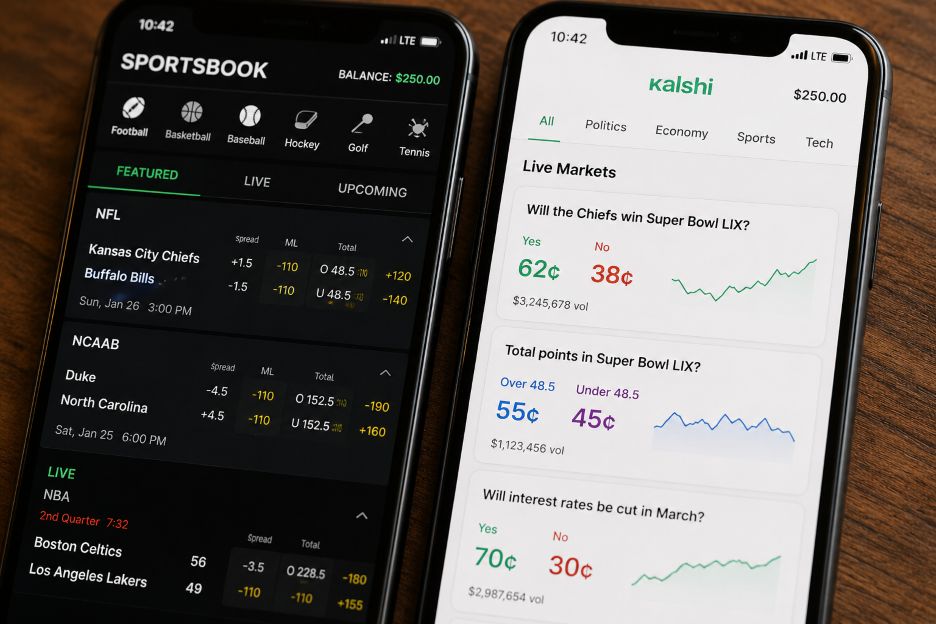
A Clash Between Two Gambling Models
Traditional sportsbooks operate through a state licensing structure. Companies such as DraftKings, FanDuel, and BetMGM must obtain approval in every state where sports wagering is legal. Tax rates, advertising rules, and betting limits differ widely across jurisdictions.
Prediction markets follow a different structure. Platforms like Kalshi operate under federal oversight tied to commodities regulation. Instead of placing conventional bets against a sportsbook, users buy and sell contracts tied to outcomes. Those outcomes may involve elections, inflation reports, entertainment awards, weather events, or sports-related questions depending on regulatory boundaries.
The distinction may appear technical, but it has enormous implications for the future of gambling regulation in America.
Why Prediction Markets Are Expanding So Quickly
Several forces are helping prediction market companies gain momentum in 2026. What once looked like a niche corner of financial technology is now attracting attention from regulators, investors, gambling operators, and mainstream consumers. The combination of federal oversight, digital trading culture, and growing interest in speculative online platforms has created conditions that allow prediction markets to expand far beyond their earlier audience.
Federal Reach
Sportsbooks face geographic limitations because every state establishes its own rules. Some states prohibit online sports betting entirely. Others permit betting but impose high taxes or strict advertising rules.
Prediction market operators argue that federal oversight creates a more unified framework. Analysts at Bloomberg Intelligence note that this structure could reduce compliance complexity and allow broader national participation if regulators continue permitting expansion.
For consumers, the experience can feel more seamless. Instead of navigating different sportsbook rules while traveling between states, users may access a single federally regulated platform.
The Financial Market Appeal
Prediction markets also attract users who view event speculation through a financial lens rather than a casino lens. The interface often resembles stock trading more than sports betting.
Research from McKinsey & Company has shown that younger digital consumers increasingly prefer hybrid financial-entertainment products that combine speculation, social engagement, and real-time data analysis. That overlap has become especially visible in cryptocurrency communities and online trading cultures.
This shift is partly why some observers describe prediction markets as a convergence between gambling, investing, and information forecasting.
Lower Political Resistance
Sports betting expansion has frequently triggered opposition from lawmakers concerned about addiction risks, advertising saturation, and college sports integrity.
Prediction markets, by contrast, are sometimes framed as financial instruments or forecasting tools. Critics dispute that framing, but it has allowed certain operators to present themselves differently from casinos or sportsbooks.
That distinction may influence future policy debates in Washington.
Why Sportsbooks Still Hold Major Advantages
Despite growing excitement around prediction markets, traditional sportsbooks remain dominant across the American gambling industry.
Massive Brand Recognition
Companies like FanDuel and DraftKings spend heavily on advertising partnerships with major sports leagues, television networks, and professional teams.
According to data from Eilers & Krejcik Gaming, established sportsbook brands continue controlling most online sports wagering revenue in the United States. Their customer acquisition systems, loyalty programs, and partnerships remain deeply entrenched.
Prediction markets still operate on a much smaller scale by comparison.
Entertainment Value
Sportsbooks are designed around entertainment experiences. Live betting, same-game parlays, promotions, and integrated streaming features keep users engaged during sporting events.
Prediction markets tend to feel more transactional. For some users, that structure may appear less emotionally engaging than traditional sports wagering environments.
This matters because gambling behavior is often driven by excitement, fandom, and social participation rather than purely rational forecasting.
Regulatory Uncertainty
Prediction markets remain under intense legal and political scrutiny. Questions continue surrounding whether sports-related event contracts should fall under commodities regulation or state gambling laws.
The Commodity Futures Trading Commission has faced mounting pressure from lawmakers and gaming interests seeking clearer boundaries for these platforms.
State gaming regulators have also signaled concern that prediction market operators may bypass state tax systems and local licensing structures.
This conflict could shape court battles and regulatory decisions for years.
The David vs. Goliath Narrative
The comparison between prediction markets and sportsbooks increasingly resembles a classic disruption story.
Sportsbooks represent the established giants. They possess billion-dollar advertising budgets, league partnerships, casino relationships, and political influence across dozens of states.
Prediction market firms position themselves as leaner technology-driven challengers operating outside traditional gambling structures. Their supporters argue that event-based trading markets offer greater efficiency and transparency.
Critics respond that prediction markets simply repackage gambling in financial terminology.
That tension has become central to the broader debate over what gambling actually means in the digital economy.
The Broader Cultural Shift
The rise of prediction markets reflects a larger transformation happening across online entertainment.
Consumers now move fluidly between sports betting apps, stock trading platforms, cryptocurrency exchanges, fantasy sports contests, and speculative social platforms. The line separating finance from gambling continues to blur.
Researchers at The Brookings Institution have warned that digital speculation ecosystems may normalize risk-taking behaviors by embedding them into everyday apps and online communities.
That concern extends beyond gambling itself. It touches broader questions about consumer protection, financial literacy, and behavioral design in modern technology platforms.
Related speculative gaming terms now appear across conversations involving sports betting, event trading, and digital forecasting markets, further blurring distinctions that once seemed easier to define.
What Happens Next
The next decade will likely determine whether prediction markets remain niche financial products or evolve into mainstream competitors to sportsbooks.
If federal regulators continue allowing expansion, prediction market platforms could gain a stronger foothold nationally. If state regulators and gambling operators successfully challenge those models, sportsbooks may retain their dominant position.
Hybrid systems could also emerge. Some analysts believe sportsbooks may eventually integrate prediction-style trading features into existing betting platforms.
Others expect stricter regulation across both industries as lawmakers attempt to address consumer risks associated with rapid digital gambling expansion.
Responsible Gambling Concerns
Whether users engage with sportsbooks or prediction markets, financial risk remains a serious issue. Gambling-related products can contribute to addiction, debt, emotional distress, and compulsive behavior for vulnerable individuals.
The National Council on Problem Gambling advises consumers to set financial limits, avoid chasing losses, and seek professional support if gambling behavior begins affecting daily life, relationships, or mental health.
As event speculation becomes more integrated into mainstream apps and digital platforms, responsible gambling safeguards will likely become an even more important part of public policy discussions.
Conclusion
The conflict between prediction markets and sportsbooks is about far more than sports betting. It represents a broader struggle over regulation, technology, finance, and the future of speculative entertainment in America.
Traditional sportsbooks still control most of the market, but federal prediction platforms are challenging assumptions about how gambling products should operate in a digital-first economy. The outcome may reshape everything from taxation and regulation to consumer behavior and online risk culture.
As newer forms of event trading continue entering mainstream conversations, related speculative gaming concepts are likely to remain part of ongoing debates about where entertainment ends and financial speculation begins.